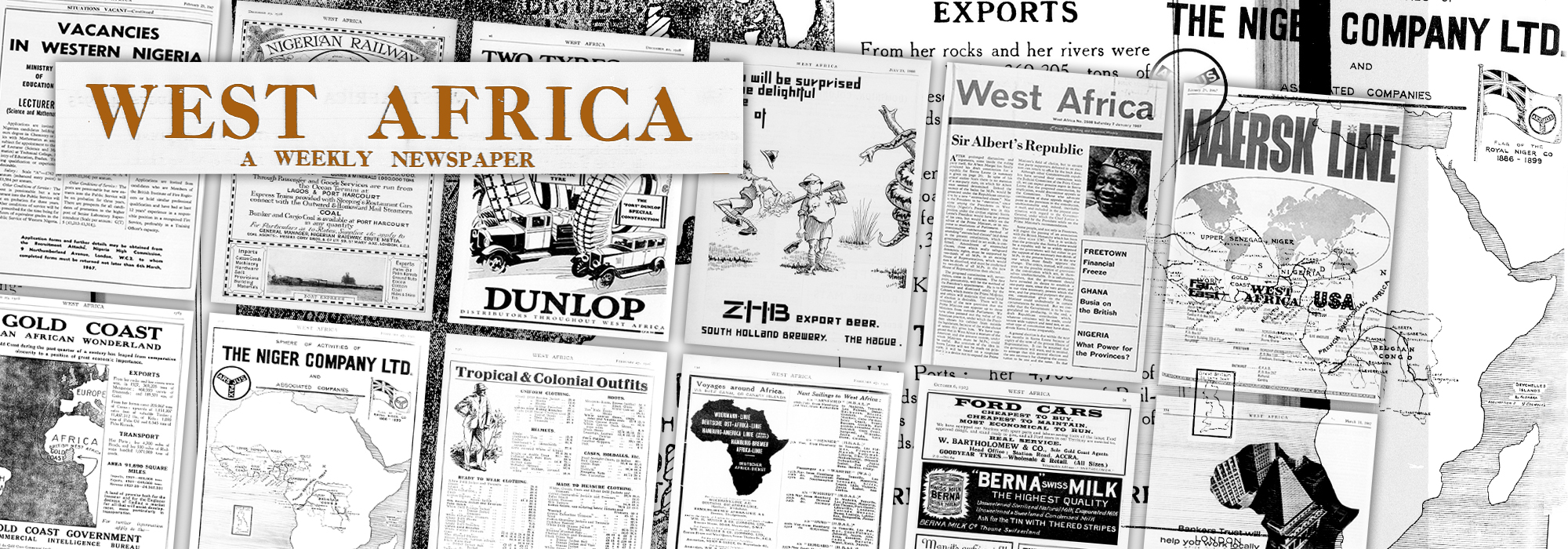
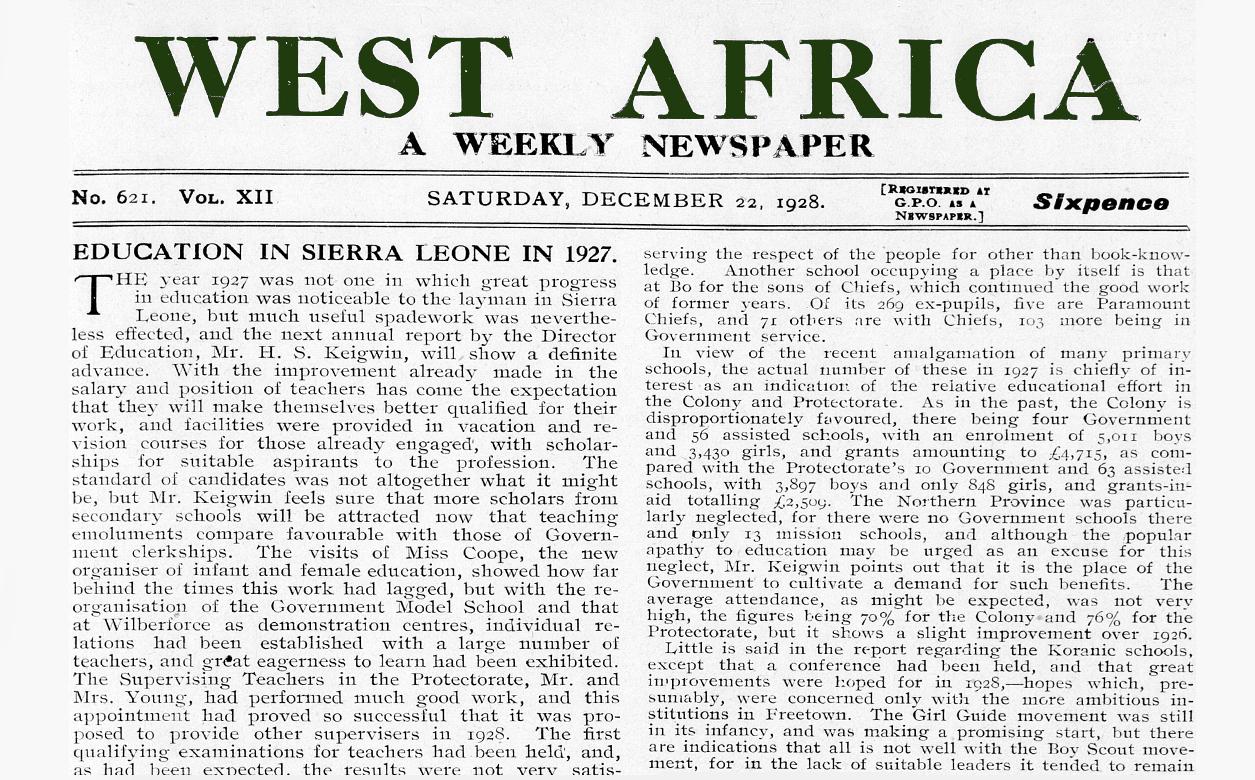
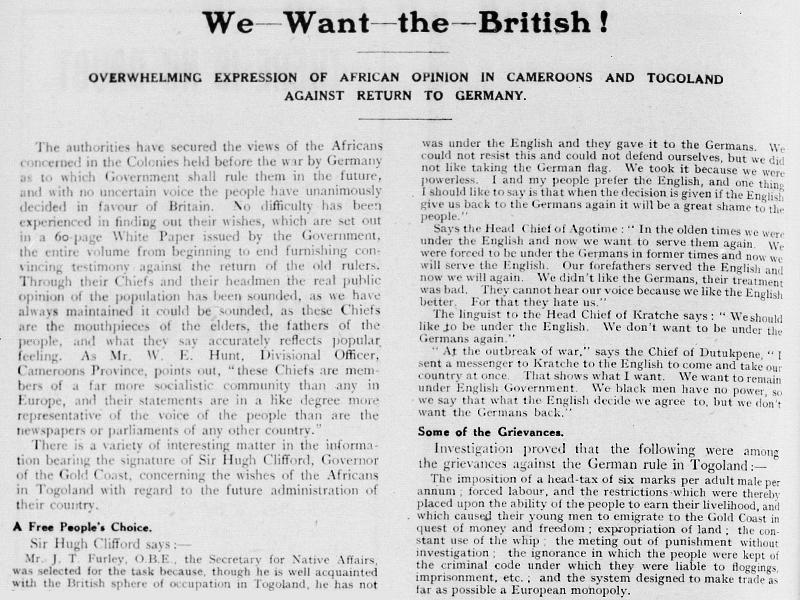
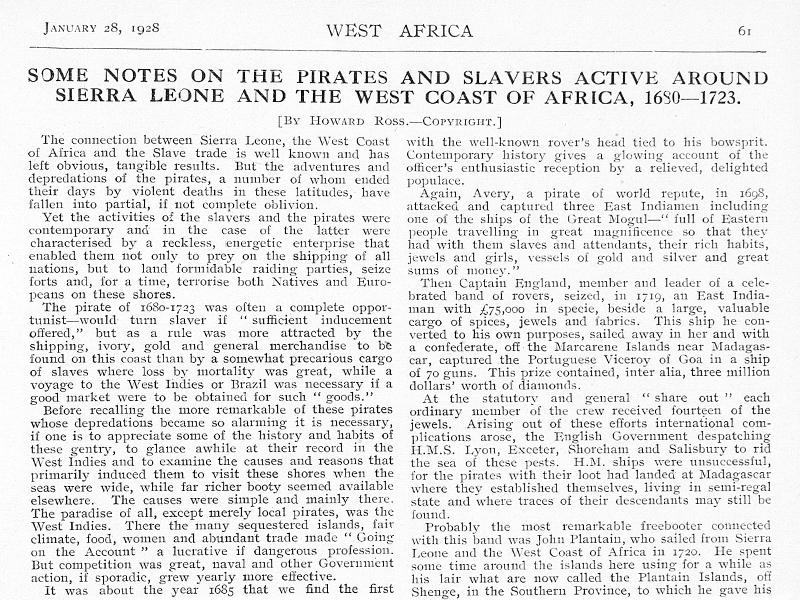
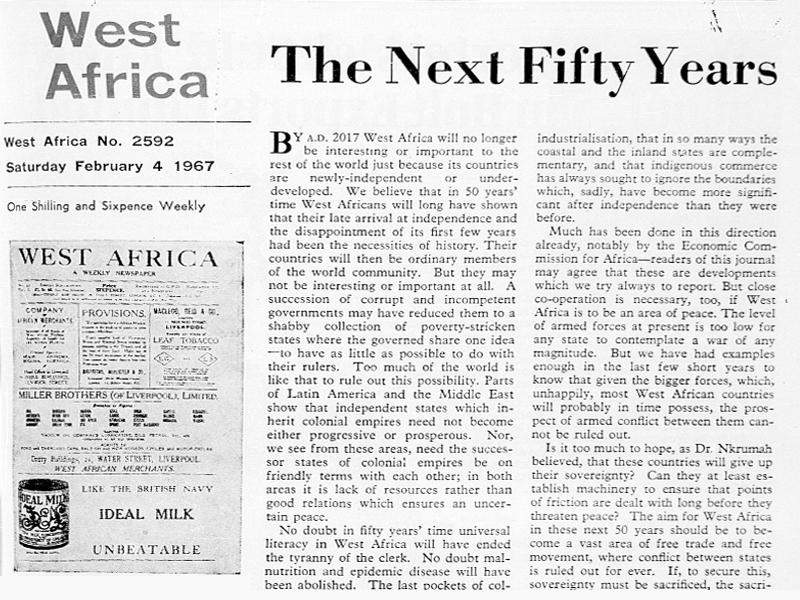
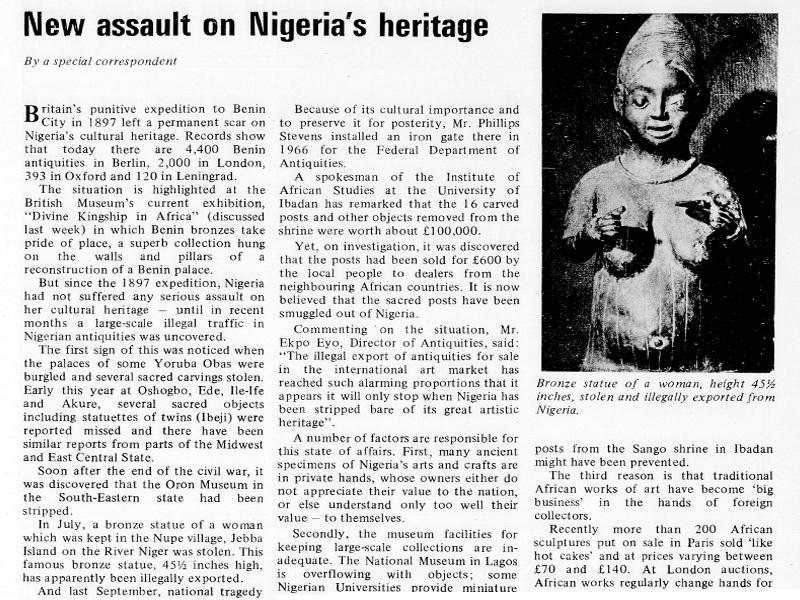
Featuring over 170,000 images, this comprehensive run of West Africa, spanning the years 1917 to 2003, offers remarkable insights into a period of huge transformation across Africa and the wider world. Through reports, intellectual debate, letters, opinion columns, and photographic coverage, the collection charts the transition from British colonial jurisdiction to independence across Nigeria, the Gold Coast (later Ghana), Sierra Leone, and The Gambia. West Africa also featured news from other African nations, most notably from French West Africa, although events and debates from across central, southern, and eastern Africa were also discussed.
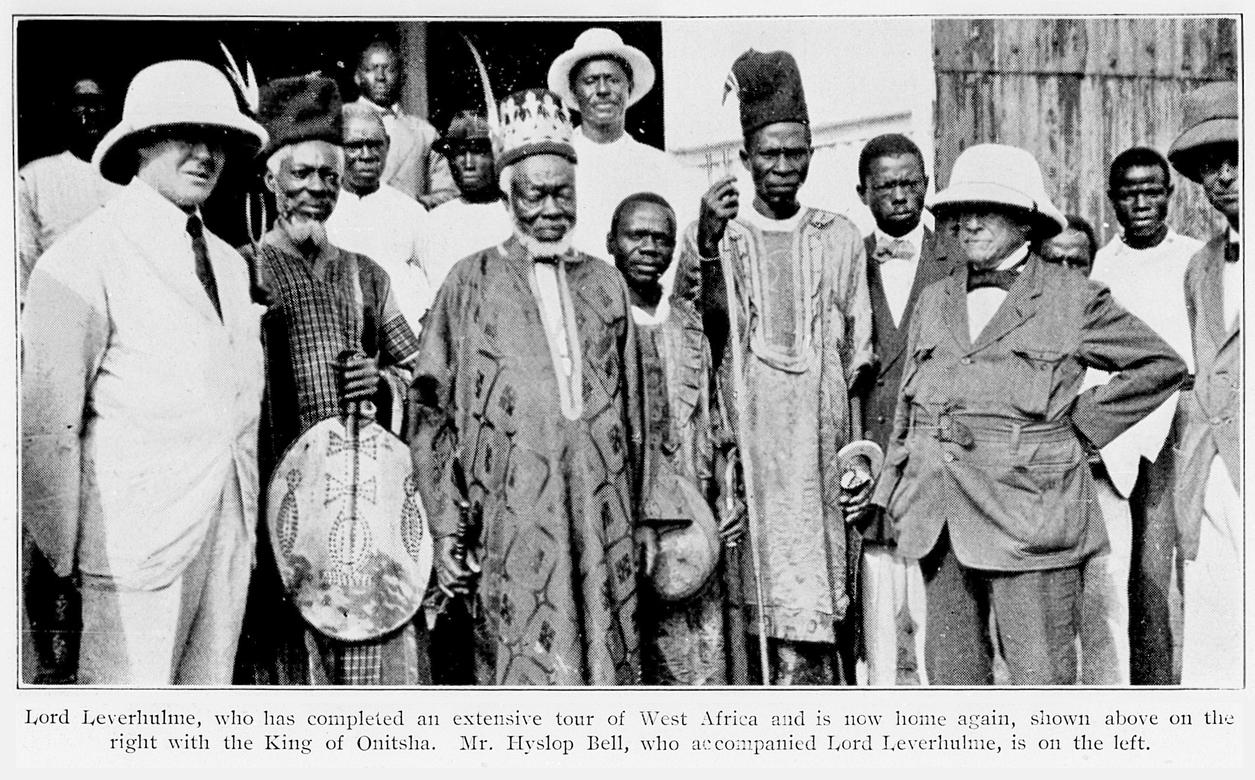
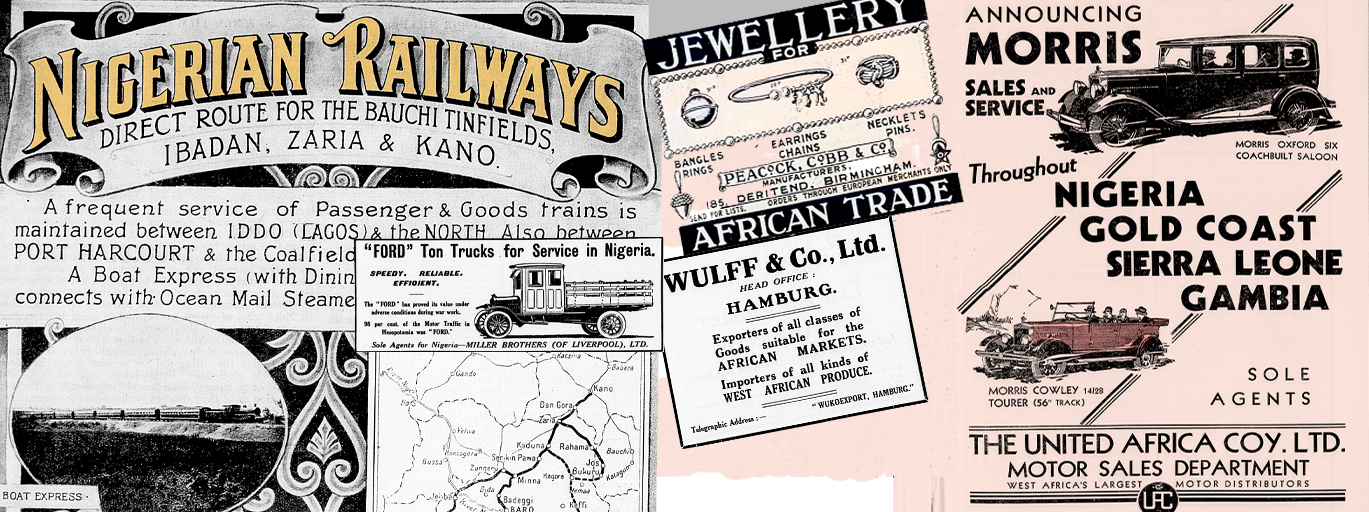
Originally published in London and aimed at British “coasters” (people employed by British trading companies and by the British government’s Colonial Office), after 1945, West Africa underwent a process of “Africanisation”. Increasingly, its editorial team addressed an African readership, focusing on new nationalist movements and leaders and, subsequently, the political turbulence of the post-independence era. The magazine became a platform for the international consumption of West African news, politics, economics, history, and culture. From 1979, it was run by Africans, having been purchased by the Daily Times, Nigeria’s state paper.
West Africa profiled influential anti-colonialist figures, such as Kwame Nkrumah, the first president of Ghana; Nnamdi Azikiwe and Obafemi Awolowo, two of the fathers of Nigerian nationalism, from the Igbo and Yoruba ethnic groups respectively; Léopold Sédar Senghor, the Senegalese cultural theorist, poet, and politician; and Félix Houphouët-Boigny, the first president of the Ivory Coast. Alongside detailed analysis of key political issues and events, West Africa spotlighted cultural trends, reporting, for example, on West Africans’ opinions on the British Empire Exhibition of 1924–25, and on the activities of West African social and sports clubs. From 1978, the magazine took a greater interest in poetry and fiction, with the Booker Prize-winning novelist, Ben Okri, serving as Literary Editor from 1981.
As a magazine that transitioned from a colonial publication to a platform for West Africans’ own accounts of their politics, history, and culture, West Africa is an invaluable resource for primary documentation on twentieth-century Africa. Its publication history reflects key trends and transformations that occurred throughout West Africa and beyond, many of which were detailed in the magazine's pages.
Given its extensive English-language coverage of francophone and anglophone affairs across West Africa, it will appeal to those interested in colonial history, particularly histories of decolonisation. It will likewise appeal to students, educators, and researchers situated within the fields of social, cultural, and political history, as well as literary studies.




.svg)


