The Slave Trade, c. 1830–1893: British Foreign Office Confidential Print Home for Freed Women Slaves

  • Home
  • Collections
  • The Slave Trade, c. 1830–1893: British Foreign Office Confidential Print
Exhibit

Home for Freed Women Slaves

Nishah Malik Published 5th October, 2026
Interactive exhibit

About this exhibit

Explore the Home for Freed Women Slaves in Cairo and British anti-Slavery efforts. 

Exhibits

More exhibits

View all exhibits
Spain and Portugal, 1837–1974: British Foreign Office Confidential Print

Non-Intervention in the Spanish Civil War

Dr Charlie Hall
Published 17th November, 2026
The Strand Magazine, 1891–1930

“Zig-Zags at the Zoo”: Animals, Illustration, and Humour in The Strand Magazine

Chloe Haney
Published 2nd September, 2026
Britannia and Eve, 1926–1957

The Tobacco Industry and Advertising: Women Smoking in Interwar Britain

Nishah Malik
Published 18th August, 2026
The Illustrated London News, 1842–2003

Illustrated London News Timeline

Nishah Malik
Published 11th August, 2026
View all exhibits
A black and white image of Liverpool docks. Overlaid is an image of North Commercial wharf of Charleston, S.C. with cotton bales for shipping to foreign and domestic ports via sailing ships.

Licensed to access Slave Trade Records from Liverpool, 1754–1792

1754   1811
Liverpool Record Office logo
Rows of enslaved people digging cane holes on the Island of Antigua

Licensed to access Slave Trading Records from William Davenport & Co., 1745–1797

1745   1797
Keele University Library logo
An engraving of The Mill Yard, grinding sugar cane in a windmill in 1823. A windmill on the left hand side, with people and cattle working.

Licensed to access Slavery, Exploitation, and Trade in the West Indies, 1759–1832

1759   1823
Llyfrgell Genedlaethol Cymru logo

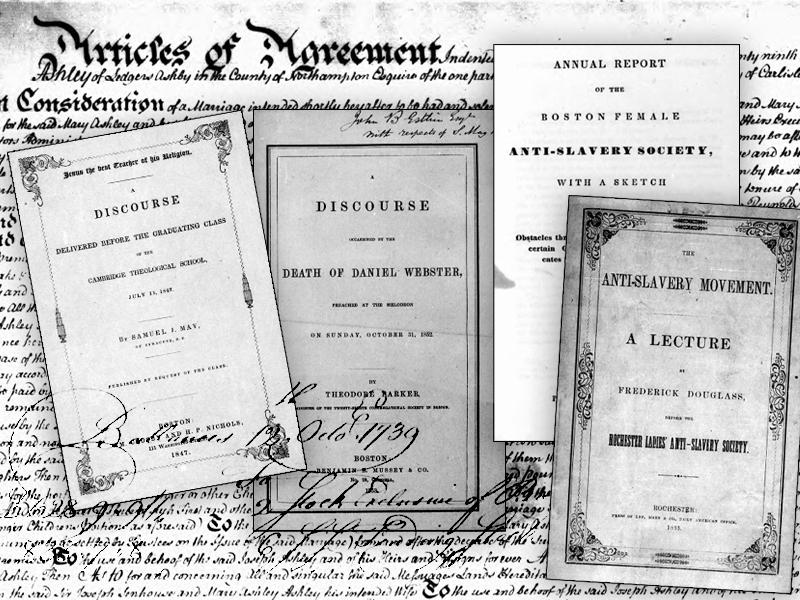
Licensed to access Slavery Through Time: from Enslavers to Abolitionists, 1675–1865

1675   1865
Bodleian Library logo
British Library logo
lock_open

Unlock Historical Research for Your Institution

Provide your students and researchers with direct access to unique primary sources.

Back to Top